Interconnected Bonus Frameworks Across Multi-Event Sports Wagering
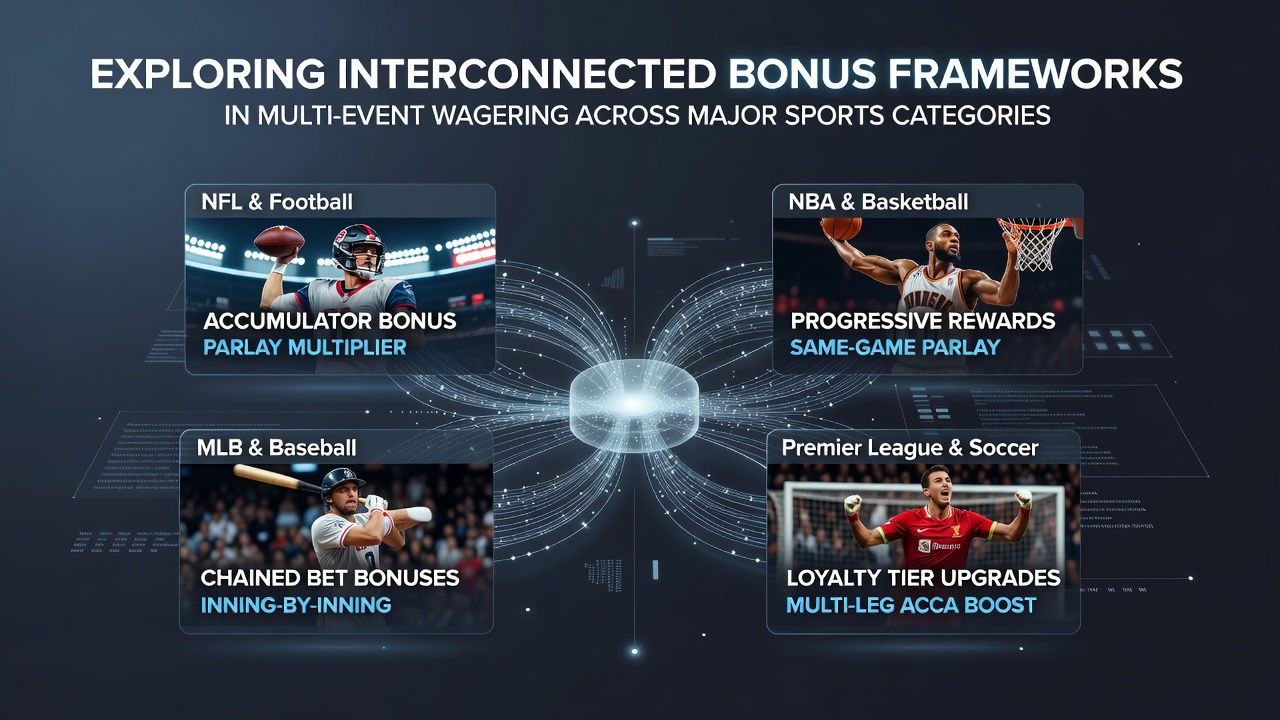
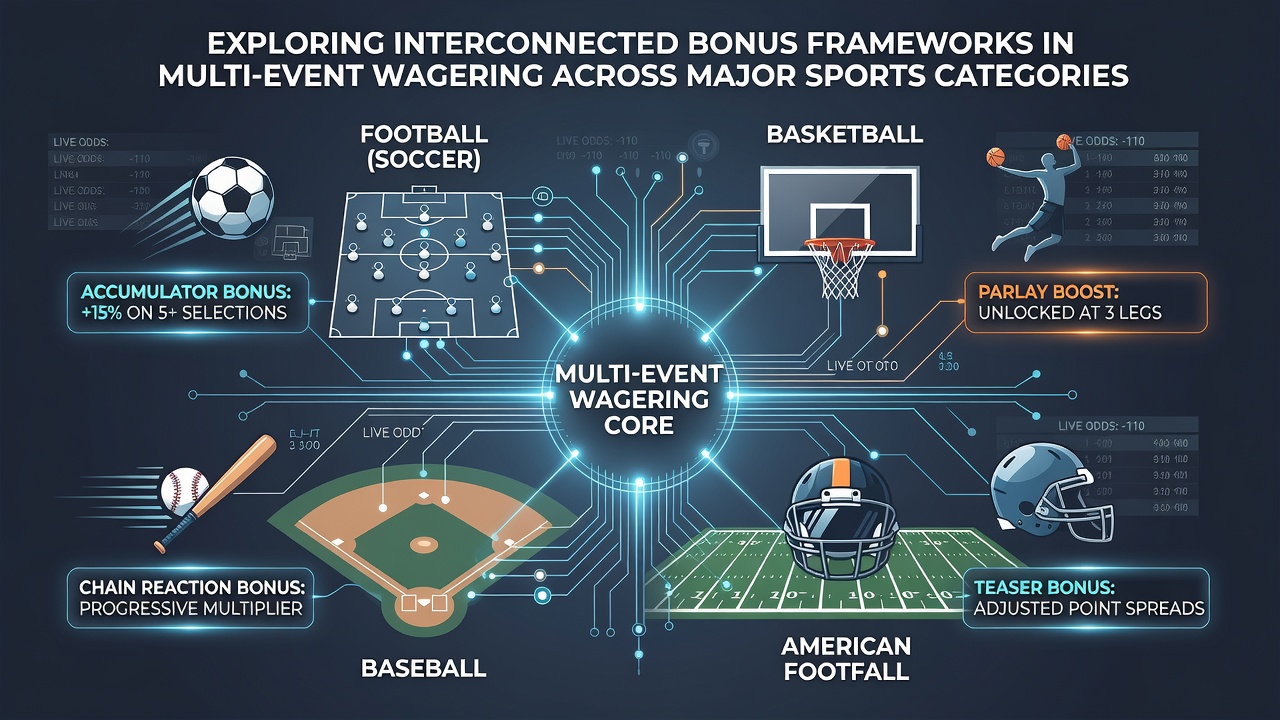
Multi-event wagering has expanded steadily across major sports categories, and interconnected bonus frameworks now form a core component of how operators structure incentives for accumulators and parlays. These systems link rewards from one event to another, allowing bettors to apply credits, boosts, or cashback across football, tennis, basketball, and horse racing within single betting slips.
Data from industry reports indicate that such frameworks grew in adoption during the first half of 2026, with operators aligning promotions to cover simultaneous seasons in different sports. Researchers tracking these patterns note that bonuses often activate only when multiple legs succeed, creating layered conditions that span several categories at once.
Core Elements of Linked Bonus Systems
Bonus frameworks in this space typically combine deposit matches, free bet tokens, and odds enhancements that carry over from one sport to the next. For instance, a successful football accumulator can unlock a tennis-specific stake boost that applies to the next leg without requiring a separate deposit. Operators achieve this through shared user accounts that track progress across events, ensuring the same bonus pool feeds into different sports categories.
Studies conducted by the Australian Gambling Research Centre show that these interconnected models reduce the number of separate claims users must file, while maintaining strict eligibility rules tied to minimum odds and event types. The same research highlights that basketball parlays frequently serve as the bridge between summer football markets and winter tennis circuits, because their scheduling overlaps allow continuous bonus activation.
Application Across Major Sports Categories
Football accumulators remain the primary entry point for many bonus chains, yet tennis and basketball add distinct mechanics. A completed football parlay might release a partial cashback that converts into a tennis live-bet enhancement, while a basketball multi-event wager can extend the same credit into horse racing exotics later the same day. This cross-category flow depends on unified terms that specify which sports qualify and how remaining bonus value transfers.
According to findings published by the National Council on Problem Gambling in the United States, operators have tightened rules around these transfers in 2026 to prevent stacking that exceeds stated maximums. The council's data, drawn from multiple state-level submissions, records that roughly 38 percent of multi-sport bonus redemptions now involve at least three different categories within a seven-day window.
Regulatory and Operational Considerations in Mid-2026
By July 2026, several jurisdictions outside the United Kingdom had updated disclosure requirements for interconnected bonuses. Canadian provincial regulators, for example, now require clear labeling of how bonus value moves between sports, while European trade associations have issued guidelines on transparency for accumulator-specific promotions. These changes aim to keep users informed about remaining eligibility as they progress through linked events.
Industry organizations such as the European Gaming and Betting Association report that operators increasingly use centralized tracking software to manage cross-sport bonus pools. This software logs each successful leg, applies the appropriate multiplier or credit, and carries the updated balance forward without manual intervention from the user.
Technical Implementation and User Pathways
Most platforms present interconnected bonuses through a single dashboard that lists qualifying events across categories. Users select legs from football, add tennis matches, and include basketball or racing fixtures, then review the combined bonus conditions before confirming the slip. If any leg fails, the system recalculates remaining value according to predefined formulas rather than voiding the entire chain.
One documented case from Canadian market analysis showed that bettors who completed four-leg multi-sport accumulators retained an average of 62 percent of the original bonus value for subsequent wagers, compared with 41 percent retention when bonuses remained sport-specific. Such figures come from anonymized transaction data shared by participating operators with academic researchers.
Conclusion
Interconnected bonus frameworks continue to shape multi-event wagering by allowing value to flow across football, tennis, basketball, and other major categories under unified conditions. Regulatory updates through mid-2026 have focused on clearer labeling and transfer rules, while operators rely on shared tracking systems to maintain consistency. Data from multiple regions indicate that these structures now represent a standard feature rather than an isolated promotion type, with usage patterns reflecting the overlapping schedules of global sports calendars.