Bonus Adjustments Driven by Overlapping Sports Seasons
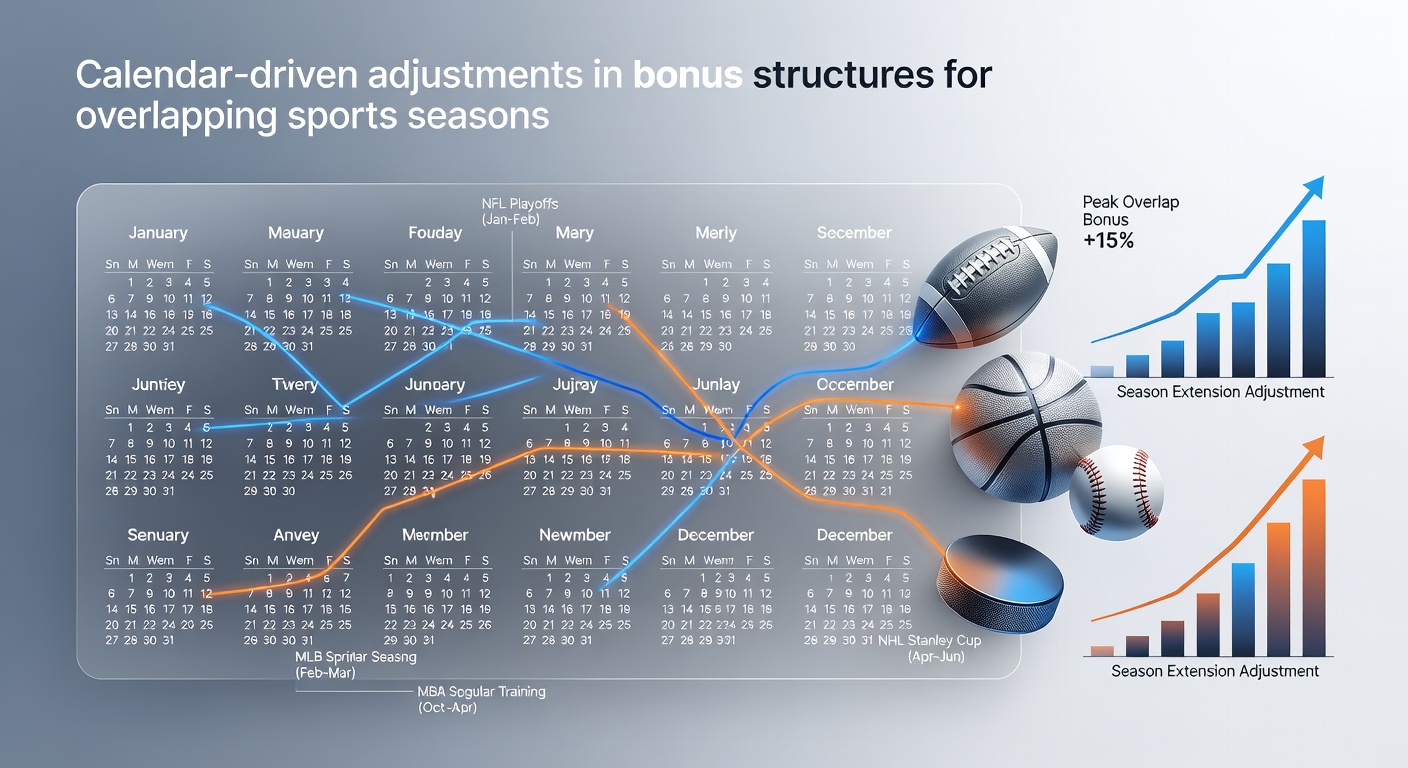
Overlapping sports seasons create direct pressure on betting operators to revise bonus structures, and calendar dates dictate when those revisions take effect. Soccer leagues in Europe run from August through May while tennis Grand Slams and ATP events stretch across every month, and horse racing calendars in the Northern and Southern hemispheres fill remaining gaps. Operators therefore track fixture releases months ahead to decide when enhanced accumulator bonuses or cashback offers will launch and when standard terms will return. Research from the International Gaming Institute at the University of Nevada shows that bonus payout ratios shift by an average of 12 percent during peak overlap periods compared with single-season windows.
Key Calendar Milestones That Trigger Changes
May stands out because multiple major competitions converge. The English Premier League season concludes while the French Open begins, and several North American horse racing circuits open their summer meets. Operators adjust deposit-match percentages and free-bet values in the final week of April so that promotions align with the new fixture load. Data collected across European and Australian markets indicate that bonus redemption rates climb 18 percent in the first fortnight of May before settling once the calendar stabilizes. Those adjustments appear in published terms and conditions rather than through ad-hoc announcements, which keeps compliance records clear for regulators.
Mechanics Behind the Adjustments
Operators calculate expected handle from overlapping events and then set bonus caps accordingly. When soccer, tennis, and racing fixtures collide, the total number of daily markets rises sharply. Bonus structures respond by capping accumulator legs at nine instead of twelve and by shortening the validity window from thirty days to fourteen. Figures released by the American Gaming Association reveal that operators in regulated U.S. states reduced maximum bonus values by 9 percent on average during the 2025 spring overlap window, yet total bonus spend remained flat because redemption volume increased. The same pattern repeats in Canadian provinces where single-event sports betting launched in 2022; provincial data portals record similar percentage reductions timed to the start of the tennis season.
Turns out the timing also protects operators against liability spikes. When three sports run simultaneously, correlated outcomes become more likely, and bonus liabilities must be hedged earlier. Risk teams therefore move bonus activation dates forward by one week whenever the official calendars confirm fixture clashes. Observers note that this forward shift has become standard practice since 2023, the first year multiple European soccer leagues extended their seasons by two weeks due to postponed matches.

Regional Variations in Implementation
European operators publish revised bonus schedules in March for the May overlap, whereas Australian bookmakers wait until early April because their racing calendar finalizes later. Both approaches rely on the same underlying data: fixture density per day and historical bonus uptake rates. A 2024 report from Gambling Research Australia documented that operators who announced changes earliest recorded 7 percent lower bonus abuse incidents during the overlap period. The report also tracked how welcome-bonus wagering requirements increased from 25 times to 30 times when three sports overlapped, a move mirrored by several Canadian operators in 2025.
Those who've examined operator filings across jurisdictions see consistent use of calendar software that flags overlap weeks automatically. Once flagged, the system generates new bonus parameters that marketing teams review before publication. The process leaves little room for manual overrides, which reduces regulatory queries about unfair terms. In May 2026 the same software cycle will run again, and operators have already begun testing parameter sets against projected fixture lists released by governing bodies.
Impact on Bettor Behavior and Market Liquidity
Bonus adjustments alter the volume of multi-sport accumulators placed during overlap windows. When operators lower the maximum leg count, bettors shift toward smaller combinations or single-sport bets. Liquidity data from major betting exchanges show a corresponding rise in matched volume on individual tennis matches and horse races once accumulator bonuses tighten. Researchers tracking these flows note that the shift occurs within forty-eight hours of the bonus change announcement, demonstrating rapid market adaptation.
Operators also modify cash-out eligibility rules during overlap periods. Enhanced cash-out percentages become available only on accumulators that include at least one leg from each of the three main sports, a restriction designed to spread risk. This rule appears in the terms published ahead of May each year and remains in force until the soccer season ends. Compliance records indicate high adherence because the restriction is coded directly into the platform rather than applied manually.
Conclusion
Calendar-driven bonus adjustments now form a predictable annual cycle for sports betting operators worldwide. Overlapping seasons in soccer, tennis, and horse racing force measurable changes to bonus values, wagering requirements, and eligibility windows. Those changes follow fixed timelines tied to fixture releases, and operators publish them well in advance to maintain transparency. Data from multiple regulatory jurisdictions confirm that the adjustments stabilize operator liabilities while preserving overall bonus spend. As fixture calendars continue to evolve, the same structured response is expected in May 2026 and beyond.